
Social networks have become a key tool in crisis situations, but also a channel for the amplification of disinformation that can jeopardize collective response. The DRI project explores how information —and disinformation— circulates in emergency contexts, and how this circulation influences the resilience of communities and critical infrastructures . By combining data, interviews, and mathematical and computational models , we aim to better understand how societies can prepare for future crises.
Objectives
Analysis of the role of social networks in crisis situations: how official information, disinformation and institutional messages circulate, and what impact they have on the resilience of communities and critical infrastructures.
Based on the case of the DANA in Valencia, the project studies how disinformation affects public perception and collective response, the dissemination of official messages, online ideological polarization, and its connection to the collapse and reconstruction of road networks.
Objectiu final: aportar coneixement interdisciplinari i aplicat per afrontar millor futures crisis.
Methodology
Interdisciplinary and participatory approach combining:
- Social data analysis (networks, time series)
- Interviews and qualitative methods (grounded theory)
- Participation ciutadana a través d’una plataforma online
- Mathematical and computational models for information spread and the dynamics of infrastructure collapse and recovery
Code and data
Reports and publications
Coming soon.
Research team
 Emanuele Cozzo
Investigador Principal, UB. Expert en xarxes socials i polarització.
 Oriol Artime
UB/UBICS. Expert en infraestructures crítiques i xarxes complexes.
 Eva Rifà
Doctoranda UB. Models de difusió i polarització.
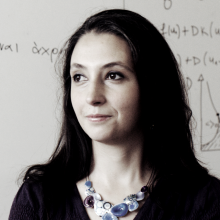 Luce Prignano
Heurística. Coordinació participació i dades socials.
 Marta Cambronero
Heurística/UOC. Mètodes híbrids i narrativa ideològica.
 Aleix Nicolas
Tècnic de suport a la recerca. Processament i organització de dades.
DRI
és un projecte de recerca en col·laboració entre el grup de recerca
CEPS
del
UBICSS
(Universitat de Barcelona Institute of Complex Systems) i l'ONG
Heuristica
.
Està finançat per la
Universitat de Barcelona
dins de la convocatòria
Resiliència davant de catàstrofes
.